
Understanding the intricacies of the auto insurance claim procedure in California is essential for any policyholder seeking to protect their financial assets after a vehicular incident. California’s insurance landscape is governed by complex statutes that differ significantly from other high-traffic jurisdictions such as Sydney, Australia or Ontario, Canada. Navigating these regulations requires a professional grasp of “Pure Comparative Negligence” and strict adherence to the California Department of Insurance (CDI) mandates. This guide provides a strategic roadmap to ensuring your claim is handled with the precision required to secure a fair and timely settlement.
A Professional Guide to the Auto Insurance Claim Procedure in California
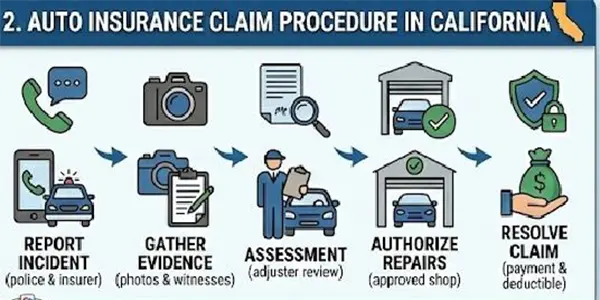
In the aftermath of a collision, the efficiency of your recovery depends on how strictly you follow the formalized auto insurance claim procedure in California. California law is designed to ensure transparency, but the burden of proof rests heavily on the claimant. Whether you are navigating the dense traffic of Los Angeles or the coastal routes of San Francisco, the legal requirements for reporting and documenting a loss remain a critical baseline for your insurance carrier’s evaluation.
Immediate Legal Mandates and Site Documentation
The integrity of an insurance claim is often decided within the first thirty minutes following an accident. In the United States, and specifically under the California Vehicle Code, certain actions are legally required to maintain the validity of your insurance policy coverage.
- Exchange of Information: You must exchange driver’s license details, vehicle registration, and insurance provider information. Failure to do so in the State of California can lead to hit-and-run charges.
- Evidence Acquisition: High-resolution photography is the gold standard. Capture wide-angle shots of the intersection and close-ups of the property damage. This level of detail is as vital in Hong Kong Central as it is in Beverly Hills.
- Regulatory Reporting: If the accident results in injury or property damage exceeding $1,000, a Report of Traffic Accident Occurring in California (SR 1) must be filed with the DMV within 10 days.
Strategic Coordination with Insurance Adjusters
Once the initial report is filed, the auto insurance claim procedure in California enters the adjustment phase. This is where professional communication becomes your greatest asset. Adjusters are tasked with minimizing the insurer’s liability, making your documentation the primary tool for negotiation.
| Phase of Adjustment | Critical Requirement |
|---|---|
| Liability Assessment | Provision of witness statements and dashcam footage. |
| Damage Appraisal | Detailed inspection by a certified California appraiser. |
| Settlement Offer | Review against California Fair Claims Settlement Practices. |
Navigating the Right to Repair and OEM Standards
One of the most significant advantages of the auto insurance claim procedure in California is the consumer’s right to select their own repair facility. Unlike some restrictive policies found in international markets like Hong Kong, California Anti-Steering laws prevent insurers from forcing you to use a specific mechanic.
Professional claimants should insist on Original Equipment Manufacturer (OEM) parts. While insurers may push for “Like Kind and Quality” (LKQ) or aftermarket parts to save costs, ensuring your vehicle is restored to its pre-accident safety rating is paramount for maintaining the vehicle’s resale value and structural integrity.
Maximizing Your Settlement and Protecting Your Premium
The final stage of the auto insurance claim procedure in California involves the settlement release. It is a common mistake to accept the first offer. Professional policyholders compare the settlement against current market valuations in similar high-cost areas like Sydney or New York to ensure the payout is equitable.
- Total Loss Threshold: In California, a vehicle is typically considered a “Total Loss” when the cost of repairs plus the salvage value exceeds the vehicle’s Actual Cash Value (ACV).
- Proposition 103 Protections: California’s unique laws protect drivers from arbitrary premium hikes. If you are less than 51% at fault, your insurer generally cannot increase your rates for that specific claim.
By adhering to this structured auto insurance claim procedure in California, you ensure that your rights are protected under the law and that your financial recovery is maximized. Whether you are dealing with a minor fender-bender or a complex multi-vehicle collision, a professional, evidence-based approach is the only way to navigate the multi-billion dollar US insurance industry effectively.