
Selecting the most suitable coverage in the Australian automotive market requires a deep understanding of regional risks and financial liabilities. Choosing a car insurance policy in Australia is not merely about finding the lowest premium; it involves a strategic evaluation of asset protection against the high cost of repairs in major hubs like Sydney, Melbourne, and Brisbane. With the 2026 insurance landscape evolving, Australian drivers must navigate a complex array of options to secure their financial future effectively, much like policyholders in Ontario, Canada or California, USA.
Strategic Guide to Choosing a Car Insurance Policy in Australia
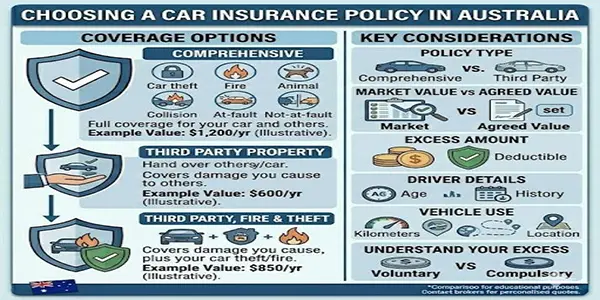
When choosing a car insurance policy in Australia, the first step is distinguishing between mandatory legal requirements and optional asset protection. While Compulsory Third Party (CTP) insurance—often referred to as a “Green Slip” in New South Wales—is a legal necessity for registration, it provides no coverage for vehicle damage. Professional drivers recognize that a robust insurance strategy requires additional layers of protection to mitigate the risks of high-traffic urban environments.
Evaluating Coverage Tiers: Comprehensive vs. Third Party
The Australian market offers three primary tiers of voluntary insurance. A professional car insurance premium comparison is essential to determine which tier aligns with your vehicle’s value and your personal risk tolerance.
- Comprehensive Insurance: The highest level of protection, covering accidental damage to your vehicle, theft, fire, and legal liability for damage caused to others.
- Third Party Property Damage (TPPD): Covers only the damage you cause to other vehicles or property; it does not cover your own car.
- Third Party Fire and Theft: An intermediate option that adds protection for your vehicle specifically against fire damage or criminal theft.
Agreed Value vs. Market Value: Impact on Settlements
A critical decision in choosing a car insurance policy in Australia is how your vehicle is valued in the event of a total loss. This choice significantly impacts both your annual premium and your final payout amount.
| Valuation Method | Strategic Advantage |
|---|---|
| Agreed Value | Provides financial certainty with a fixed payout amount agreed upon at the start of the policy. |
| Market Value | Offers lower monthly premiums by paying out the car’s current worth at the time of the claim. |
Essential Policy Add-ons for the Australian Landscape
Beyond the base coverage, choosing a car insurance policy in Australia often involves selecting specialized add-ons that provide peace of mind during long-distance interstate travel or daily commuting in cities like Sydney.
- Hire Car After Accident: Ensures you remain mobile while your vehicle is undergoing repairs in an authorized network shop.
- Windscreen Excess Waiver: Allows for one glass replacement per year without paying a deductible—highly recommended for highway driving.
- Roadside Assistance: Nationwide 24/7 support for mechanical breakdowns, flat tires, or battery issues across the Australian continent.
Authorized Repairer Networks in the Australian Market
Before finalizing your decision in choosing a car insurance policy in Australia, investigate the insurer’s network of authorized mechanics. Many top-tier Australian providers have direct agreements with certified collision centers in Hong Kong and major US cities, ensuring that repairs meet international safety standards. Utilizing a “preferred repairer” often comes with a lifetime guarantee on workmanship, a feature that savvy drivers in California and Ontario also prioritize.
Ultimately, choosing a car insurance policy in Australia is an exercise in balancing cost with comprehensive protection. By understanding the nuances of policy inclusions, excess structures, and valuation methods, you can secure a policy that offers superior protection in 2026. Whether you are driving a luxury sedan in Hong Kong Central or a family SUV in rural Australia, professional insurance management is the key to minimizing out-of-pocket expenses during unforeseen events.