
Receiving a denial letter from an American insurer can be a complex legal challenge, but it is a situation that many policyholders successfully overcome with the right strategic approach. In the United States, insurance companies are bound by the “Covenant of Good Faith and Fair Dealing,” meaning any arbitrary or baseless rejection of a claim could have significant legal repercussions. Whether you are navigating a dispute in California, Texas, or New York, knowing how to dispute a denied car insurance claim is your first step toward financial recovery. This professional guide outlines the essential legal maneuvers used by policyholders in the USA to overturn wrongful denials in 2026.
How to Dispute a Denied Car Insurance Claim: Legal Steps for US Policyholders
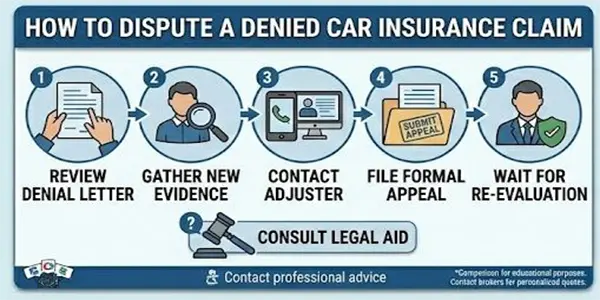
The auto insurance claim procedure in California and throughout the United States is strictly governed by state-specific insurance codes. When an insurer denies a claim, they must provide a detailed written explanation citing the specific policy language or factual findings that led to their decision. Understanding how to dispute a denied car insurance claim requires a meticulous review of this document to identify inconsistencies or “Bad Faith” indicators that could serve as the foundation for a legal challenge.
Phase 1: Internal Appeal and Policy Interpretation
Most Tier-1 insurers in the USA, similar to those in Ontario, Canada and Sydney, Australia, have a formalized Internal Dispute Resolution (IDR) process. This is often the most cost-effective way to resolve a dispute before moving to litigation.
- Request the Full Claim File: Under many state laws, including those in California, you have a legal right to see the evidence the insurer used, including adjuster notes and internal appraisals.
- Draft a Formal Rebuttal: Your appeal letter should be a factual, not emotional, document. Use specific policy citations to argue why the denial contradicts the terms of your contract.
- Submitting Supplemental Evidence: If the denial was based on “insufficient documentation,” provide new witness statements, dashcam footage, or independent repair estimates immediately.
Phase 2: Escalation to State Regulatory Bodies
If the internal appeal fails, the next legal step for disputing a denied car insurance claim is filing a formal complaint with your State Department of Insurance. In California, the Department of Insurance (CDI) acts as a powerful mediator between consumers and carriers.
| Dispute Level | Primary Action | Legal Objective |
|---|---|---|
| State Complaint | File a Request for Assistance (RFA). | Triggers a regulatory audit of the insurer’s handling of your claim. |
| Mediation | Participate in non-binding arbitration. | A neutral third party attempts to reach a settlement without a trial. |
Recognizing “Insurance Bad Faith” in the USA
One of the most powerful tools in how to dispute a denied car insurance claim is the threat of a Bad Faith lawsuit. In California and many other states, if an insurer fails to investigate a claim properly or misrepresents policy facts, you may be entitled to damages far exceeding the original policy limits. This legal leverage is a key reason why insurers in Hong Kong and Sydney are often more willing to settle when a professional attorney becomes involved.
Phase 3: Litigation and Engaging Legal Counsel
When administrative avenues are exhausted, the final legal step for disputing a denied car insurance claim is civil litigation. In 2026, lawsuits are often filed when high-value claims involving luxury vehicles or significant bodily injury are at stake. Hiring a specialized “Bad Faith” attorney can change the dynamic of the negotiation, as firms are forced to account for potential court costs and punitive damages.
In conclusion, knowing how to dispute a denied car insurance claim is about persistence and documentation. Whether you are facing a denial in Hong Kong Central or a suburban district in Ontario, the principles of transparency and adherence to policy law remain universal. By following these structured legal steps, US policyholders can ensure their rights are protected and that they receive the full compensation promised under their insurance contract.