
Receiving a denial notice from an insurance carrier can be a devastating financial blow, yet it is rarely the final word in the settlement process. Understanding the legal steps for disputing a denied car insurance claim is essential for policyholders who believe their claim has been unfairly rejected or undervalued. In high-stakes jurisdictions such as California, USA or Sydney, Australia, insurance law provides robust protections against “bad faith” practices. This professional guide explores the systematic approach required to challenge an insurer’s decision in 2026, drawing comparisons with regulatory frameworks in Ontario, Canada and Hong Kong Central.
Legal Steps for Disputing a Denied Car Insurance Claim: A Professional Roadmap
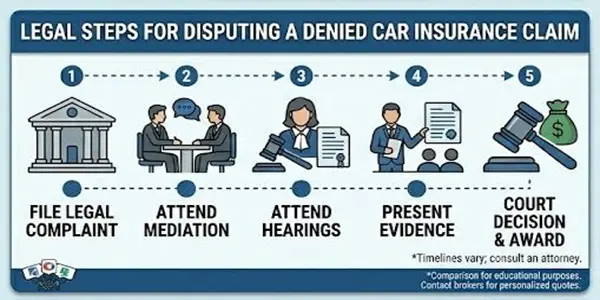
When an insurer issues a denial, the auto insurance claim procedure in California and other major markets requires them to provide a specific, written explanation citing policy language. The first of the legal steps for disputing a denied car insurance claim is a thorough audit of this denial letter. Professional legal counsel often looks for ambiguities in policy wording that could be interpreted in favor of the policyholder—a principle known as “contra proferentem” in many international legal systems.
Internal Appeal and Evidence Substantiation
Before escalating to external litigation, most regulatory bodies in Ontario and the USA require the exhaustion of an insurer’s internal dispute resolution (IDR) process. This stage is critical for correcting factual errors or providing missing documentation.
- Request a Claim File: In California and Sydney, you have the right to request the documents the insurer used to make their decision.
- Secondary Independent Appraisal: Hiring a certified independent appraiser can provide a counter-valuation that is difficult for the insurer to ignore.
- Formal Written Appeal: Submit a structured rebuttal addressing each point of the denial with timestamped evidence and witness statements.
Escalation to Ombudsman and External Review
If the internal appeal is unsuccessful, the next legal steps for disputing a denied car insurance claim involve neutral third-party mediation. Most Tier-1 markets provide free or low-cost arbitration services to prevent the courts from becoming overwhelmed.
| Region | Regulatory Oversight Body | Primary Function |
|---|---|---|
| USA (California) | California Department of Insurance (CDI) | Investigates consumer complaints and enforces fair claims laws. |
| Australia | Australian Financial Complaints Authority (AFCA) | Provides binding independent dispute resolution for consumers. |
| Canada (Ontario) | Financial Services Regulatory Authority (FSRA) | Oversees insurance conduct and consumer protection in Ontario. |
Litigation and Bad Faith Lawsuits
When administrative remedies fail, the final legal steps for disputing a denied car insurance claim involve civil litigation. In the USA, if an insurer is found to have denied a claim without a reasonable basis, they may be liable for “Bad Faith” damages, which can exceed the original claim amount. This legal threat is a powerful motivator for insurers in New York and Hong Kong to settle disputes fairly before a trial commences.
Securing Professional Legal Representation
Navigating the legal steps for disputing a denied car insurance claim is complex and time-sensitive. Statutes of limitations in California and Sydney vary, meaning any delay can forfeit your right to recover damages. Whether you are dealing with a complex liability dispute in Hong Kong Central or a denied theft claim in Ontario, engaging a specialized insurance attorney ensures that your case is built on solid legal precedent. In 2026, as insurers increasingly rely on AI for claim adjustments, professional human oversight remains the ultimate safeguard for consumer rights and financial justice.