
Navigating the complex regulatory environment of the Sunshine State requires a strategic understanding of minimum coverage mandates versus actual financial exposure. Liability insurance limits in Florida are unique in the American legal landscape due to the state’s “no-fault” insurance system. For high-net-worth individuals and professional drivers in Miami, Orlando, or Tampa, simply meeting the state’s minimum requirements is often insufficient to safeguard personal assets from aggressive litigation. This professional analysis explores how to optimize your coverage in Florida, USA, and draws comparisons with the liability frameworks found in Ontario, Canada and Sydney, Australia.
Liability Insurance Limits in Florida: Protecting Your Assets After an Accident
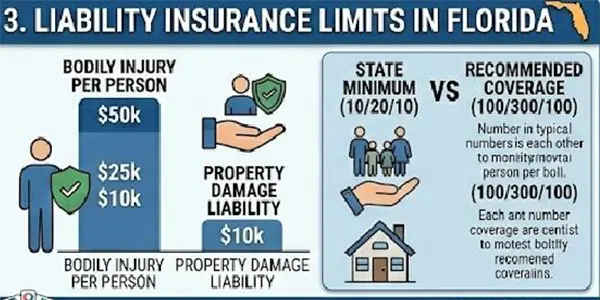
Understanding liability insurance limits in Florida begins with the distinction between Personal Injury Protection (PIP) and Bodily Injury Liability (BIL). Under Florida law, every driver must carry at least $10,000 in PIP and $10,000 in Property Damage Liability (PDL). However, unlike in California or New York, Bodily Injury Liability is not strictly mandated for all drivers, which creates a significant “coverage gap” that can leave your personal assets vulnerable in a multi-vehicle collision.
The Critical Gap: PIP vs. Bodily Injury Liability
In the context of liability insurance limits in Florida, relying solely on PIP can be a catastrophic financial mistake. PIP only covers 80% of your medical bills and 60% of lost wages, regardless of fault. If you are sued for a permanent injury in Miami, your personal savings, real estate, and investments are at risk if you do not carry adequate BIL coverage.
- Bodily Injury Liability (BIL): Pays for serious and permanent injury or death to others when you are at fault. In high-cost areas like Hong Kong Central or Florida, professional adjusters recommend at least $100,000/$300,000 limits.
- Property Damage Liability (PDL): Covers damage to another person’s property. Given the prevalence of luxury vehicles in Sydney and Florida, the $10,000 state minimum is rarely sufficient.
- Uninsured Motorist (UM) Coverage: Essential in Florida, as it protects you if you are hit by one of the state’s many uninsured drivers.
Strategic Asset Protection: Recommended Coverage Levels
When performing a car insurance premium comparison in Florida, the objective should be asset immunization. A professional insurance portfolio should align with your total net worth to prevent “judgment liens” after a major accident.
| Coverage Type | Florida Legal Minimum | Professional Recommendation (2026) |
|---|---|---|
| Bodily Injury (BIL) | $0 (Non-Mandatory*) | $100,000 / $300,000 Minimum |
| Property Damage (PDL) | $10,000 | $50,000 – $100,000 |
| Uninsured Motorist | Optional | Match your BIL limits |
*Note: BIL becomes mandatory in Florida under certain financial responsibility laws after an accident or specific violations.
The Role of Umbrella Insurance in Florida
For individuals with significant assets in Ontario or the USA, an Umbrella Policy provides an extra layer of protection beyond standard liability insurance limits in Florida. These policies typically provide $1 million or more in additional liability coverage for a relatively low annual premium, ensuring that your financial legacy is protected from the high cost of legal defense and settlement payouts in Hong Kong or Miami.
Conclusion: Navigating Florida’s 2026 Legal Landscape
Ultimately, liability insurance limits in Florida are about managing the “what if” scenarios of life on the road. While the state minimums are designed to keep initial costs low, they provide a false sense of security in a litigious society. By opting for higher BIL and UM limits, Florida drivers can secure the same level of professional protection expected in elite global markets like Sydney, Australia and California. In 2026, being underinsured is a risk that high-value asset owners simply cannot afford to take. A proactive audit of your Florida policy today is the best defense against the uncertainties of tomorrow.