
In the challenging climate of the Great White North, maintaining road safety is as much a financial priority as it is a physical one. Utilizing winter tire discounts and lowering Canadian auto premiums has become a standard strategy for savvy drivers in Ontario, Canada and Alberta. Canadian insurance law specifically mandates that insurers provide incentives for safety-conscious behaviors, particularly those that mitigate the high risks of winter driving. This professional analysis explores the hidden avenues for premium reduction in the Canadian market, drawing parallels with high-standard safety protocols found in California, USA and Sydney, Australia.
Winter Tire Discounts and Other Secret Ways to Lower Canadian Auto Premiums
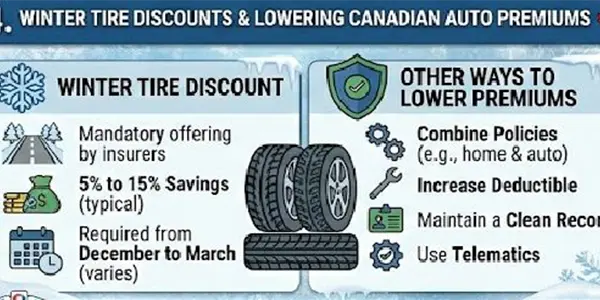
The implementation of winter tires is one of the most effective methods for lowering Canadian auto premiums instantly. Since 2016, insurance providers in Ontario have been legally required to offer a discount (typically ranging from 3% to 5%) to drivers who install four winter tires during the snowy season. However, the “secret” to maximizing these savings lies in understanding the precise timelines and documentation required by Tier-1 insurers to maintain eligibility for these professional-grade incentives.
Strategic Methods for Premium Optimization in Canada
Beyond the well-known tire incentives, several overlooked strategies can assist in lowering Canadian auto premiums significantly. These methods require proactive policy management and a deep understanding of the Canadian actuarial landscape, much like the sophisticated insurance markets of Hong Kong Central.
- Telematics and UBI Programs: Usage-Based Insurance (UBI) apps can offer discounts of up to 25% for drivers who demonstrate safe braking and acceleration patterns on icy roads.
- Graduated Licensing Discounts: In Ontario, completing a ministry-approved driver education course can lower premiums for new drivers, a standard practice also seen in California.
- Professional Association Rates: Members of certain alumni networks, professional orders, or labor unions often have access to “group rates” that are not advertised to the general public.
Comparing Regional Savings: Ontario vs. The Global Market
When performing a car insurance premium comparison, it is clear that Canadian drivers face unique costs associated with extreme weather. The following table highlights how different safety features impact premiums in Ontario compared to other high-CPC regions.
| Safety Feature / Strategy | Premium Impact (Canada) | Global Context (USA/Australia) |
|---|---|---|
| Winter Tire Installation | 3% – 5% Mandatory Discount | N/A (Climate Specific) |
| Multi-Vehicle Bundling | 10% – 15% Reduction | Standard in California and Sydney. |
| Short Commute Waiver | Variable Discount | Highly prevalent in Hong Kong. |
Leveraging Bundling and Loyalty Incentives
A professional approach to lowering Canadian auto premiums must include the “bundling” of residential and automotive policies. Insurers in Ontario and Alberta are highly motivated to retain multi-line clients, often offering “Loyalty Discounts” that increase the longer you remain with the carrier without an at-fault claim. This strategy is mirrored by top-tier providers in Sydney and New York, where customer lifetime value is a primary metric for pricing adjustments.
Conclusion: The Value of a Proactive Insurance Audit
Ultimately, winter tire discounts and lowering Canadian auto premiums are about more than just seasonal adjustments; they are about maintaining a professional insurance profile. By auditing your policy annually and ensuring every applicable discount—from winter tires to professional affiliations—is applied, you can mitigate the rising costs of vehicle ownership in 2026. Whether you are driving through the winter storms of Ontario or the high-traffic zones of Hong Kong Central, a data-driven approach to insurance is the most effective way to secure elite protection at a competitive price point.